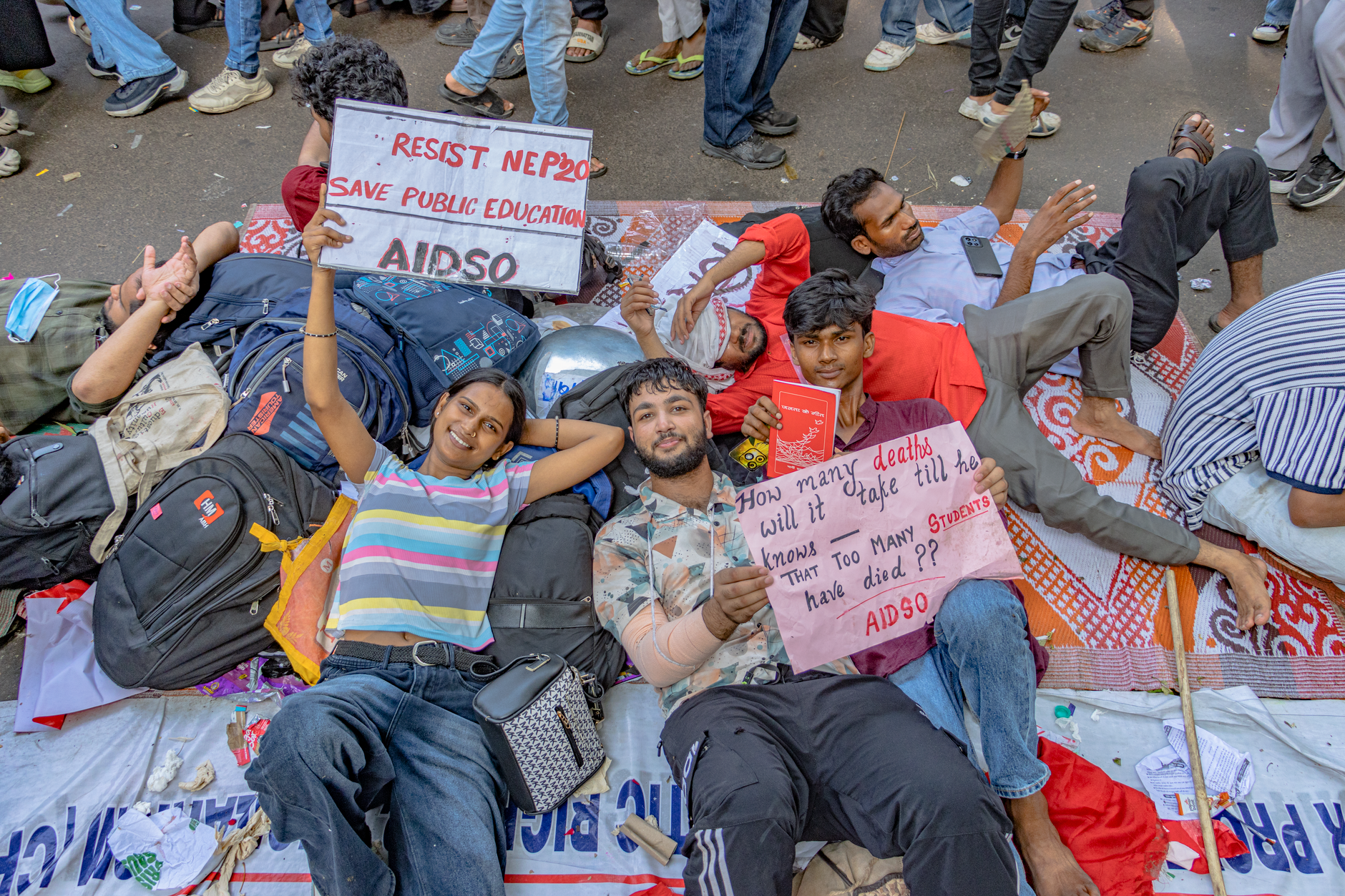
The streets of several Indian cities have recently witnessed growing youth protests, and the underlying cause is deeply rooted in numbers that tell a troubling story. Over the past twelve years, education spending by state governments across India has experienced a significant decline, threatening the quality and accessibility of public education for millions of students.
The Declining Investment in Education
State governments, which shoulder the primary responsibility for school education in India's federal structure, have progressively reduced their expenditure on education as a proportion of their total budgets. This trend marks a departure from the period of educational expansion that characterized the early 2000s, when initiatives like Sarva Shiksha Abhiyan and the Right to Education Act drove increased investment in the sector.
The decline in education spending comes at a particularly critical time when India's demographic dividend – its large young population – could either become an economic asset or a liability depending on skill development and educational outcomes. With approximately 260 million students enrolled in schools across the country, the implications of reduced state expenditure extend far beyond balance sheets.
Understanding the Numbers
Education expenditure by states is typically measured as a percentage of their Gross State Domestic Product (GSDP) or as a share of total state budget outlays. Both metrics have shown downward trends in many states, though the extent varies considerably across different regions.
The reduction reflects several factors, including competing demands on state budgets, increased expenditure on subsidies and welfare schemes, rising pension obligations, and debt servicing costs. Additionally, the implementation of the Goods and Services Tax (GST) and subsequent revenue-sharing arrangements have affected state finances, often leading to difficult choices about spending priorities.
Impact on Educational Infrastructure
The consequences of reduced spending are visible across multiple dimensions of the education system. School infrastructure development has slowed in many states, with delayed construction of new buildings, inadequate maintenance of existing facilities, and insufficient provision of basic amenities like toilets, drinking water, and electricity.
Teacher recruitment has also suffered, leading to increased student-teacher ratios and greater reliance on contract teachers who often receive lower salaries and fewer benefits than regular government teachers. This affects both the quality of instruction and the morale of the teaching workforce.
Regional Disparities Widen
- Southern states like Kerala and Tamil Nadu have historically maintained higher education spending, but even these states have faced budget pressures
- Northern and eastern states, which already lagged in educational indicators, have seen more pronounced cuts
- Northeastern states show mixed patterns, with some maintaining spending levels due to special category status provisions
- Western states like Maharashtra and Gujarat have experienced fluctuating expenditure patterns tied to industrial growth and revenue cycles
The Digital Divide Deepens
The reduced spending has particularly affected the digitalization of education, a gap that became glaringly apparent during the COVID-19 pandemic. Many state governments lacked resources to provide digital infrastructure, devices, or internet connectivity to students from economically weaker sections, effectively excluding them from online learning during lockdowns.
Higher Education Also Affected
While school education absorbs the largest share of state education budgets, higher education institutions have also experienced funding pressures. State universities face resource crunches that affect faculty positions, research capabilities, library resources, and campus infrastructure. This has led to increased reliance on student fees, making higher education less accessible to economically disadvantaged students.
Youth Mobilization and Demands
The protests reflect growing awareness among young people that underinvestment in education directly affects their future prospects. Student organizations and youth groups have mobilized around several demands, including restoration of education budgets to recommended levels, improved infrastructure, better teacher recruitment, and enhanced digital access.
The National Education Policy 2020 recommends that public spending on education should reach 6 percent of GDP, with states and the central government sharing this responsibility. However, the actual spending by states has moved in the opposite direction, creating a significant gap between policy aspirations and fiscal reality.
The Way Forward
Reversing the decline in education spending requires not just political will but also creative financing solutions. Some states are exploring public-private partnerships for infrastructure, leveraging technology to reduce per-student costs, and improving efficiency in resource allocation. However, experts caution that education is fundamentally a public good that requires sustained government investment.
The youth protests have brought attention to an issue that affects India's long-term development trajectory. Whether this translates into concrete policy changes in state budgets remains to be seen, but the demographic and economic stakes could not be higher.
This article is for general informational purposes only and represents an analysis of trends in public finance and education policy. Readers should refer to official government documents and reports for specific data and policy details relevant to their state or region.